Join our network of trusted partners today and make a difference in your clients' lives.
Join the Building Forensics professional network for access to upcoming technical papers on mould, dampness, and building-related illness - plus exclusive referral perks.
MOULD AND BACTERIA RISK REDUCTION WITHOUT TOXIC BURDEN
Low-toxicity dry-fog disinfection using chemistry your body already produces — designed for maximum safety in occupied homes and buildings.
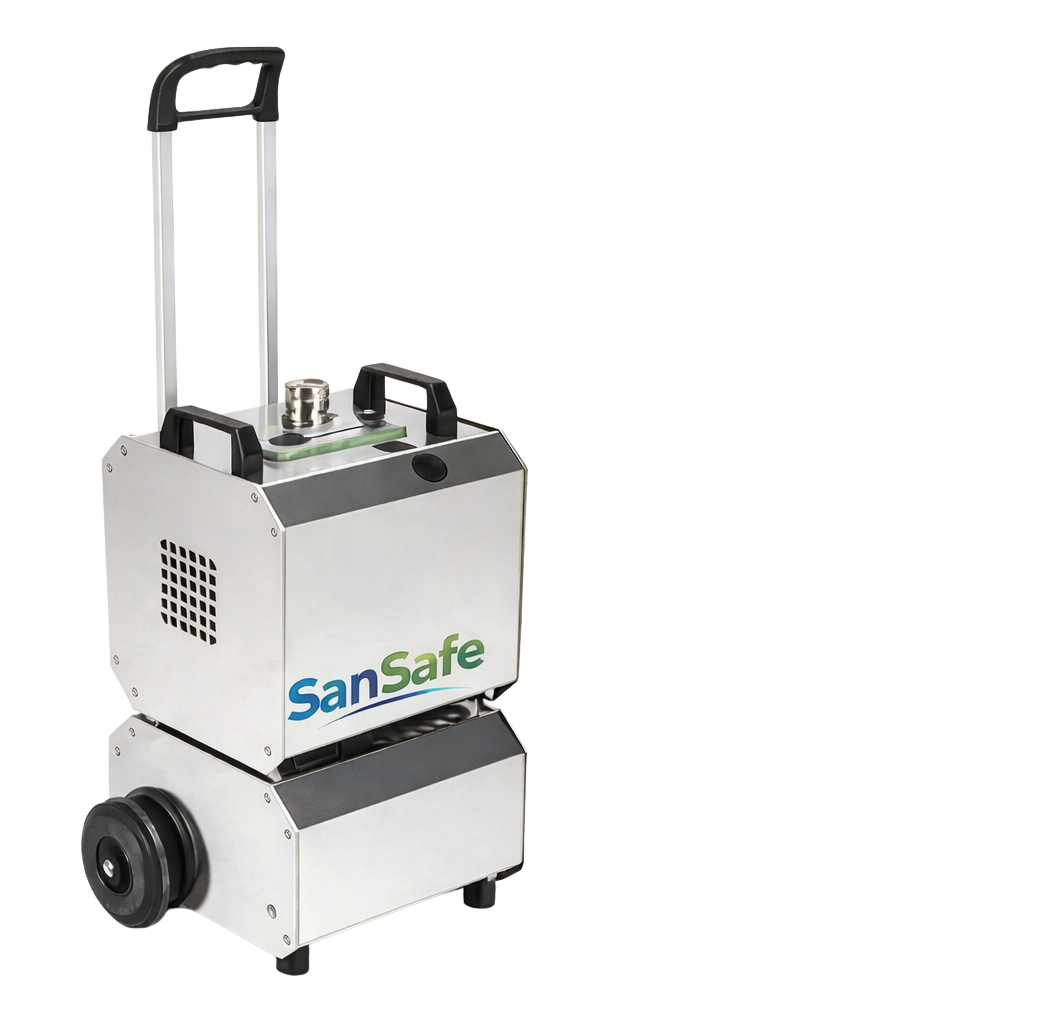
Why People Choose SanSafe™
- Reduces mould, bacteria and viral risk without toxic chemicals.
- No lingering chemical residue, unlike many fogging alternatives
- Suitable for occupied homes — minimal disruption
- Comparable outcomes at around 50% lower cost than many services
(See DATA menu for laboratory testing results)
Important Data
Check If SanSafe™ Fits Your Situation
SanSafe™ is designed for practical, proportionate microbial risk reduction, not removal or cure.
This short check helps confirm whether SanSafe™ is appropriate based on:
- Your budget and expectations
- Your need to remain in the property
- Your health context
Where serious health issues or chronic illness are present, fogging should not be viewed as a standalone answer and further assessment may be required.
Get a SanSafe™ Treatment Quote (from £600)
Most fogging services are priced at £1,000 or more per visit.
SanSafe™ delivers similar real-world fogging outcomes — reducing microbial load — at around 50% lower cost, using a natural, low-toxicity sanitising product that does not leave harmful residue.
Pricing depends on property size and layout.
Compare SanSafe™ with Other Fogging Products
All fogging products aim to do the same thing: reduce microbial load.
In real buildings, differences in outcome are often modest, because fogging does not remove contamination, fragments, or toxins.
The meaningful differences are usually:
- Chemical residue
- Disruption and vacating time
- Repeatability
- Cost
Lab Results & Comparison DATA

EUROPEAN CHEMICALS AGENCY (ECHA) AND UK HEALTH & SAFETY EXECUTIVE (HSE) PRODUCT TYPES
| Product Type | Heading | Use |
|---|---|---|
| PT 1 | Human hygiene | Products in this group are biocidal products used for human hygiene purposes, applied on or in contact with human skin or scalps for the primary purpose of disinfecting the skin or scalp. |
| PT2 | Disinfectants and algaecides not intended for direct application to humans or animals |
Used for the disinfection of surfaces, materials, equipment and furniture which are not used for direct contact with food or feeding stuffs. Usage areas include, inter alia, swimming pools, aquariums, bathing and other waters, air conditioning systems, and walls and floors in private, public, and industrial areas and in other areas for professional activities. Used for disinfection of air, water not used for human or animal consumption, chemical toilets, waste water, hospital waste and soil. Used as algaecides for treatment of swimming pools, aquariums and other waters and for remedial treatment of construction materials. Used to be incorporated in textiles, tissues, masks, paints and other articles or materials with the purpose of producing treated articles with disinfecting properties. |
| PT3 | Veterinary hygiene |
Used for veterinary hygiene purposes such as disinfectants, disinfecting soaps, oral or corporal hygiene products or with anti-microbial function. Used to disinfect materials and surfaces associated with the housing or transportation of animals. |
| PT4 | Food and feed area |
Used for the disinfection of equipment, containers, consumption utensils, surfaces or pipework associated with the production, transport, storage or consumption of food or feed (including drinking water) for humans and animals. Used to impregnate materials which may enter into contact with food animals. |
| PT5 | Drinking water | Used for the disinfection of drinking water for both humans and animals. |
MICROBIOLOGICAL TEST CERTIFICATES: May 2021
| Test Certificate | Test Type | Environment | Microorganism Species | Contact Time | Log and %age Reduction | Concentration | Pass |
|---|---|---|---|---|---|---|---|
| EN1276 (2019) | Bacterial activity | Evaluation of bactericidal activity of chemical disinfectants and antiseptics used in food, industrial, domestic and institutional areas. |
Pseudomonas aeruginosa Escherichia coli Staphylococcus aureus Enterococcus hirae |
1 min |
≥Log 5 99.999% ≥Log 5 99.999% ≥Log 5 99.999% ≥Log 5 99.999% |
100ppm 100ppm 100ppm 100ppm |
Pass Pass Pass Pass |
| EN 14476:2013 +A3:2019 | Viricidal activity | This European Standard applies to products that are used in the medical area in the fields of hygienic handrub, hygienic handwash, instrument disinfection by immersion, surface disinfection by wiping, spraying, flooding or other means and textile disinfection. This European Standard applies to areas and situations where disinfection is medically indicated. Such indications occur in patient care, for example: in hospitals, in community medical facilities, and in dental institutions; in clinics of schools, of kindergartens, and of nursing homes; and may occur in the workplace and in the home. It may also include services such as laundries and kitchens supplying products directly for the patients. |
Modified vaccinia virus Ankara (MVA) Enveloped virus |
5 mins 1 min |
>Log 4 99.99% >Log 4 99.99% >Log 4 99.99% >Log 4 99.99% >Log 4 99.99% Log3.98 99.98% |
500ppm 200ppm 100ppm 500ppm 200ppm 100ppm |
Pass Pass Pass Pass Pass Pass |
| EN16777 | Viricidal activity | Evaluation of products that are used in the medical area for disinfecting non-porous surfaces including surfaces of medical devices without mechanical action. Such indications occur in patient care, for example: in hospitals, in community medical facilities, in dental institutions; in clinics of schools, of kindergartens, and of nursing homes and may occur in the workplace and in the home. It may also include services such as laundries and kitchens supplying products directly for the patients. |
Vaccinia virus Enveloped virus |
5 mins 1 min |
>Log 4 99.99% >Log 4 99.99% >Log 4 99.99% >Log 4 99.99% >Log 4 99.99% Log3. 99.98% |
500ppm 200ppm 100ppm 500ppm 200ppm 100ppm |
Pass Pass Pass Pass Pass Pass |
| EN13697 | Bacterial activity | Non-porous surface test for the evaluation of bactericidal and/or fungicidal activity of chemical disinfectants used in food, industrial, domestic and institutional areas. |
Pseudomonas aeruginosa Escherichia coli Staphylococcus aureus Enterococcus hirae |
1 min |
>Log4 99.99% >Log4 99.99% >Log4 99.99% >Log4 99.99% |
100ppm 100ppm 100ppm 100ppm |
Pass Pass Pass Pass |
| EN1650 | Yeast Fungi/mould |
Fungicidal or yeasticidal activity of chemical disinfectants and antiseptics used in food, industrial, domestic and institutional areas - |
Candida albicans Aspergillus brasiliensis |
1 min 1 min |
≥Log 4 99.99% ≥Log 4 99.99% ≥Log 4 99.99% 2.98 99.98% 2.32 99.32% |
500ppm 250ppm 125ppm 500ppm 250ppm 125ppm |
Pass Pass Pass Pass Pass Pass |
| EN14348 | Mycobactericidal | Evaluation of mycobactericidal activity of chemical disinfectants in the medical area including instrument disinfectants |
Mycobacterium avium Mycobacterium terrae |
1 min |
>Log 4 99.99% >Log 4 99.99% Log 1.53 95.30% |
500ppm 250ppm 50ppm |
Pass Pass Pass |
| EN13727:2012 + A2:2015 | Bacterial Activity | This European Standard applies to areas and situations where disinfection or antisepsis is medically indicated, including hygienic handrub, hygienic handwash, surgical handrub, surgical handwash, instrument disinfection by immersion, and surface disinfection by wiping, spraying. Such indications occur in patient care (e.g. hospitals), in community medical facilities and in dental institutions; in clinics of schools, of kindergartens and of nursing homes; |
Pseudomonas aeruginosa Escherichia coli Staphylococcus aureus Enterococcus hirae |
30 secs |
>Log 5 99.999% >Log 5 99.999% >Log 5 99.999% |
1000ppm 500ppm 200ppm |
Pass Pass Pass |
| EN13624:2013 | Fungicidal or yeasticidal activity | This European Standard applies to areas and situations where disinfection or antisepsis is medically indicated, and for hygienic handrub, hygienic handwash, surgical handrub, surgical handwash, instrument disinfection by immersion, and surface disinfection by wiping and spraying. Such indications occur in patient care (e.g. hospitals), in community medical facilities and in dental institutions, in clinics of schools, of kindergartens and of nursing homes; and may occur in the workplace and in the home. It may also include services such as laundries and kitchens supplying products. | Candida albicans | 30 secs |
>Log4 99.99% ≤3.08 99.90% ≤3.08 99.9.0% |
1000ppm 500ppm 200ppm |
Pass |
| NF T 72-281 | Misting | The purpose of standard NF T 72-281 is to reference and validate the bactericidal, fungicidal, yeasticidal, sporicidal and virucidal effectiveness of the products of manufacturers of airborne surface disinfection systems (spray). The sectors concerned by these products are human and veterinary health, the food industry, the industrial sector and communities. |
Pseudomonas aeruginosa Escherichia coli Staphylococcus aureus Enterococcus hirae Bacillus subtilis spores |
1 min |
Log6.49 99.9999% Log7.53 99.99999 Log6.63 99.9999% Log7.32 99.99999 Log4.0 99.99% |
200ppm 200ppm 200ppm 200ppm 200ppm |
Pass Pass Pass Pass Pass |
| EN1656: 2019 | Bacterial activity | Evaluation of bactericidal activity of chemical disinfectants and antiseptics used in the veterinary area. |
Escherichia coli Staphylococcus aureus Streptococcus uberis Streptococcus agalactiae |
5min |
>Log 5 99.999% >Log 5 99.999% >Log 5 99.999% >Log 5 99.999% |
200ppm 200ppm 200ppm 200ppm |
Pass Pass Pass Pass |
| EN13727 | Bacterial activity | This European Standard applies to products that are used in the medical area in the fields of hygienic handrub, hygienic handwash, surgical handrub, surgical handwash, instrument disinfection by immersion, and surface disinfection by wiping, spraying, flooding or other means. This European Standard applies to areas and situations where disinfection or antisepsis is medically indicated. | K. pneumoniae (ESBL strain) |
>Log 5.9 99.9999% Log 4.07 99.99% Log 3.82 99.98% Log 2.82 99.82% |
100ppm 80ppm 50ppm 25ppm |
Pass Pass Pass Pass |
|
| EN1500 | Bacterial activity | Hygienic handrub evaluation | Escherichia coli | 30 secs | Log3.2 99.92% | 500ppm | Pass |
| EN13697 | Bacterial activity | Surface test for the evaluation of bactericidal and/or fungicidal activity of disinfectants used in food, industrial, domestic and institutional areas. |
Pseudomonas aeruginosa Escherichia coli Staphylococcus aureus Enterococcus hirae |
1 min |
Log4 99.99% Log4 99.99% Log4 99.99% Log4 99.99% |
100ppm 100ppm 100ppm 100ppm |
Pass Pass Pass Pass |
| AOAC Method 961.02 (AOAC Official Methods of Analysis; 2005), ASTM E1053 “Standard Test Method for Efficacy of Virucidal Agents Intended for Inanimate Environmental Surfaces”, and ASTM E2111-00 “Standard Quantitative Carrier Test Method to Evaluate the Bactericidal, Fungicidal, Mycobactericidal and Sporicidal Potencies of Liquid Chemical Germicides”. | Bacterial and viricidal activity | Test undertaken in US laboratory for US certification for use as a general biocide and viricide in environments such as medical facilities, dental clinics, schools, children’s nurseries, care homes, offices etc, for surface disinfection, medical instrument disinfection, food processing and water treatment. |
Staphylococcus aureus (MRSA) Salmonella enterica Listeria monocytogenes Pseudomonas aeruginosa E. coli O157:H7 Murine Norovirus MNV-1 (Human Norovirus Surrogate) Poliovirus CHAT |
1 min 1 min 1 min 1 min 1 min 1 min 1 min |
Log5 99.999% Log5 99.999% Log5 99.999% Log5 99.999% Log5 99.999% Log5 99.999% Log6 99.9999% |
100ppm 100ppm 100ppm 100ppm 100ppm 100ppm 100ppm |
Pass Pass Pass Pass Pass Pass Pass |
| EN13624 - 2013 | Fungal Activity | This European Standard applies to areas and situations where disinfection or antisepsis is medically indicated, and for hygienic handrub, hygienic handwash, surgical handrub, surgical handwash, instrument disinfection by immersion, and surface disinfection by wiping and spraying. Such indications occur in patient care, for example: in hospitals, in community medical facilities and in dental institutions, in clinics of schools, of kindergartens and of nursing homes; and may occur in the workplace and in the home. It may also include services such as laundries and kitchens supplying products. |
Candida albicans Aspergillus brasiliensis ATCC 16404 |
30 secs 5 mins 30 secs 5 mins |
>Log 4.55 99.995% >Log 4.55 99.995% Log 3.31 99.93% >Log 4.44 99.994% |
500ppm 500ppm 500ppm 500ppm |
Pass Pass Pass Pass |
What SanSafe™ Does — and Doesn’t Do
SanSafe™ :
- Reduces biological load
- Avoids toxic residue
- Is fast, clean, and economic
SanSafe™ does not:
- Remove mould, dust, or fragments
- Fix moisture or building defects
- Prevent re-contamination
It is a risk-reduction tool, not a cure or clearance process.
Talk to a Specialist
Not every situation needs the same level of response.
A short discussion with a specialist can help determine whether:
SanSafe™
is appropriate- A higher level of intervention is needed
- Low cost intervention may not be beneficial
The aim is proportionate advice, not product pushing.
When Full Professional Decontamination Is Required
Proper decontamination is a much larger process, typically involving:
- Full building investigation
- Identification of causes and moisture history
- Remediation of affected areas
- Decontamination of structure and contents
- Final air cleaning and verification
This level of intervention is disruptive, costly, and often requires vacating, but may be necessary in higher-risk cases.
SanSafe™
is designed for situations where that level of response is not achievable or proportionate.
SanSafe™ Safety and Practical Advantages
COSHH-assessed (2025) and not classified as hazardous.
It is suitable for use in:
- Occupied buildings
- Healthcare-adjacent environments
- Sensitive materials and finishes
- Short-cycle or repeat interventions
Key practical benefits include:
- No aggressive chemical residues
- No corrosive by-products
- No extended re-entry periods
- No requirement for building evacuation
This makes
SanSafe™
particularly valuable where:
- Decanting is not possible
- Vulnerable occupants remain in situ
- Budgets restrict invasive remediation
- Safer alternatives to ozone, Peracetic Acid, chlorine dioxide, or harsh biocides are required
Professional Disclaimer
SanSafe™ is a risk-reduction and hygiene tool.
It must not be misrepresented as:
- A cure
- A permanent solution
- A substitute for competent investigation
- A replacement for remediation in water-damaged buildings
Outcomes depend on:
- Building condition
- Moisture control
- Application method
- Ongoing exposure sources
Terms & Conditions
- Identification of cause
- Control of moisture
- Removal of reservoirs
- Verification of outcomes
SanSafe™ must be applied as part of a structured, defensible risk-management strategy. Results depend on building condition, contamination load, application method, and ongoing exposure controls. No chemical process provides permanent protection against new contamination events.
Important Data
Check If SanSafe™ Fits Your Situation
SanSafe™ is designed for practical, proportionate microbial risk reduction, not removal or cure.
This short check helps confirm whether SanSafe™ is appropriate based on:
- Your budget and expectations
- Your need to remain in the property
- Your health context
Where serious health issues or chronic illness are present, fogging should not be viewed as a standalone answer and further assessment may be required.
Get a SanSafe™ Treatment Quote (from £600)
Most fogging services are priced at £1,000 or more per visit.
SanSafe™ delivers similar real-world fogging outcomes — reducing microbial load — at around 50% lower cost, using a natural, low-toxicity sanitising product that does not leave harmful residue.
Pricing depends on property size and layout.
Compare SanSafe™ with Other Fogging Products
All fogging products aim to do the same thing: reduce microbial load.
In real buildings, differences in outcome are often modest, because fogging does not remove contamination, fragments, or toxins.
The meaningful differences are usually:
- Chemical residue
- Disruption and vacating time
- Repeatability
- Cost
Lab Results & Comparison DATA
EUROPEAN CHEMICALS AGENCY (ECHA) AND UK HEALTH & SAFETY EXECUTIVE (HSE) PRODUCT TYPES
| Product Type | Heading | Use |
|---|---|---|
| PT 1 | Human hygiene | Products in this group are biocidal products used for human hygiene purposes, applied on or in contact with human skin or scalps for the primary purpose of disinfecting the skin or scalp. |
| PT2 | Disinfectants and algaecides not intended for direct application to humans or animals |
Used for the disinfection of surfaces, materials, equipment and furniture which are not used for direct contact with food or feeding stuffs. Usage areas include, inter alia, swimming pools, aquariums, bathing and other waters, air conditioning systems, and walls and floors in private, public, and industrial areas and in other areas for professional activities. Used for disinfection of air, water not used for human or animal consumption, chemical toilets, waste water, hospital waste and soil. Used as algaecides for treatment of swimming pools, aquariums and other waters and for remedial treatment of construction materials. Used to be incorporated in textiles, tissues, masks, paints and other articles or materials with the purpose of producing treated articles with disinfecting properties. |
| PT3 | Veterinary hygiene |
Used for veterinary hygiene purposes such as disinfectants, disinfecting soaps, oral or corporal hygiene products or with anti-microbial function. Used to disinfect materials and surfaces associated with the housing or transportation of animals. |
| PT4 | Food and feed area |
Used for the disinfection of equipment, containers, consumption utensils, surfaces or pipework associated with the production, transport, storage or consumption of food or feed (including drinking water) for humans and animals. Used to impregnate materials which may enter into contact with food animals. |
| PT5 | Drinking water | Used for the disinfection of drinking water for both humans and animals. |
MICROBIOLOGICAL TEST CERTIFICATES: May 2021
| Test Certificate | Test Type | Environment | Microorganism Species | Contact Time | Log and %age Reduction | Concentration | Pass |
|---|---|---|---|---|---|---|---|
| EN1276 (2019) | Bacterial activity | Evaluation of bactericidal activity of chemical disinfectants and antiseptics used in food, industrial, domestic and institutional areas. |
Pseudomonas aeruginosa Escherichia coli Staphylococcus aureus Enterococcus hirae |
1 min |
≥Log 5 99.999% ≥Log 5 99.999% ≥Log 5 99.999% ≥Log 5 99.999% |
100ppm 100ppm 100ppm 100ppm |
Pass Pass Pass Pass |
| EN 14476:2013 +A3:2019 | Viricidal activity | This European Standard applies to products that are used in the medical area in the fields of hygienic handrub, hygienic handwash, instrument disinfection by immersion, surface disinfection by wiping, spraying, flooding or other means and textile disinfection. This European Standard applies to areas and situations where disinfection is medically indicated. Such indications occur in patient care, for example: in hospitals, in community medical facilities, and in dental institutions; in clinics of schools, of kindergartens, and of nursing homes; and may occur in the workplace and in the home. It may also include services such as laundries and kitchens supplying products directly for the patients. |
Modified vaccinia virus Ankara (MVA) Enveloped virus |
5 mins 1 min |
>Log 4 99.99% >Log 4 99.99% >Log 4 99.99% >Log 4 99.99% >Log 4 99.99% Log3.98 99.98% |
500ppm 200ppm 100ppm 500ppm 200ppm 100ppm |
Pass Pass Pass Pass Pass Pass |
| EN16777 | Viricidal activity | Evaluation of products that are used in the medical area for disinfecting non-porous surfaces including surfaces of medical devices without mechanical action. Such indications occur in patient care, for example: in hospitals, in community medical facilities, in dental institutions; in clinics of schools, of kindergartens, and of nursing homes and may occur in the workplace and in the home. It may also include services such as laundries and kitchens supplying products directly for the patients. |
Vaccinia virus Enveloped virus |
5 mins 1 min |
>Log 4 99.99% >Log 4 99.99% >Log 4 99.99% >Log 4 99.99% >Log 4 99.99% Log3. 99.98% |
500ppm 200ppm 100ppm 500ppm 200ppm 100ppm |
Pass Pass Pass Pass Pass Pass |
| EN13697 | Bacterial activity | Non-porous surface test for the evaluation of bactericidal and/or fungicidal activity of chemical disinfectants used in food, industrial, domestic and institutional areas. |
Pseudomonas aeruginosa Escherichia coli Staphylococcus aureus Enterococcus hirae |
1 min |
>Log4 99.99% >Log4 99.99% >Log4 99.99% >Log4 99.99% |
100ppm 100ppm 100ppm 100ppm |
Pass Pass Pass Pass |
| EN1650 | Yeast Fungi/mould |
Fungicidal or yeasticidal activity of chemical disinfectants and antiseptics used in food, industrial, domestic and institutional areas - |
Candida albicans Aspergillus brasiliensis |
1 min 1 min |
≥Log 4 99.99% ≥Log 4 99.99% ≥Log 4 99.99% 2.98 99.98% 2.32 99.32% |
500ppm 250ppm 125ppm 500ppm 250ppm 125ppm |
Pass Pass Pass Pass Pass Pass |
| EN14348 | Mycobactericidal | Evaluation of mycobactericidal activity of chemical disinfectants in the medical area including instrument disinfectants |
Mycobacterium avium Mycobacterium terrae |
1 min |
>Log 4 99.99% >Log 4 99.99% Log 1.53 95.30% |
500ppm 250ppm 50ppm |
Pass Pass Pass |
| EN13727:2012 + A2:2015 | Bacterial Activity | This European Standard applies to areas and situations where disinfection or antisepsis is medically indicated, including hygienic handrub, hygienic handwash, surgical handrub, surgical handwash, instrument disinfection by immersion, and surface disinfection by wiping, spraying. Such indications occur in patient care (e.g. hospitals), in community medical facilities and in dental institutions; in clinics of schools, of kindergartens and of nursing homes; |
Pseudomonas aeruginosa Escherichia coli Staphylococcus aureus Enterococcus hirae |
30 secs |
>Log 5 99.999% >Log 5 99.999% >Log 5 99.999% |
1000ppm 500ppm 200ppm |
Pass Pass Pass |
| EN13624:2013 | Fungicidal or yeasticidal activity | This European Standard applies to areas and situations where disinfection or antisepsis is medically indicated, and for hygienic handrub, hygienic handwash, surgical handrub, surgical handwash, instrument disinfection by immersion, and surface disinfection by wiping and spraying. Such indications occur in patient care (e.g. hospitals), in community medical facilities and in dental institutions, in clinics of schools, of kindergartens and of nursing homes; and may occur in the workplace and in the home. It may also include services such as laundries and kitchens supplying products. | Candida albicans | 30 secs |
>Log4 99.99% ≤3.08 99.90% ≤3.08 99.9.0% |
1000ppm 500ppm 200ppm |
Pass |
| NF T 72-281 | Misting | The purpose of standard NF T 72-281 is to reference and validate the bactericidal, fungicidal, yeasticidal, sporicidal and virucidal effectiveness of the products of manufacturers of airborne surface disinfection systems (spray). The sectors concerned by these products are human and veterinary health, the food industry, the industrial sector and communities. |
Pseudomonas aeruginosa Escherichia coli Staphylococcus aureus Enterococcus hirae Bacillus subtilis spores |
1 min |
Log6.49 99.9999% Log7.53 99.99999 Log6.63 99.9999% Log7.32 99.99999 Log4.0 99.99% |
200ppm 200ppm 200ppm 200ppm 200ppm |
Pass Pass Pass Pass Pass |
| EN1656: 2019 | Bacterial activity | Evaluation of bactericidal activity of chemical disinfectants and antiseptics used in the veterinary area. |
Escherichia coli Staphylococcus aureus Streptococcus uberis Streptococcus agalactiae |
5min |
>Log 5 99.999% >Log 5 99.999% >Log 5 99.999% >Log 5 99.999% |
200ppm 200ppm 200ppm 200ppm |
Pass Pass Pass Pass |
| EN13727 | Bacterial activity | This European Standard applies to products that are used in the medical area in the fields of hygienic handrub, hygienic handwash, surgical handrub, surgical handwash, instrument disinfection by immersion, and surface disinfection by wiping, spraying, flooding or other means. This European Standard applies to areas and situations where disinfection or antisepsis is medically indicated. | K. pneumoniae (ESBL strain) |
>Log 5.9 99.9999% Log 4.07 99.99% Log 3.82 99.98% Log 2.82 99.82% |
100ppm 80ppm 50ppm 25ppm |
Pass Pass Pass Pass |
|
| EN1500 | Bacterial activity | Hygienic handrub evaluation | Escherichia coli | 30 secs | Log3.2 99.92% | 500ppm | Pass |
| EN13697 | Bacterial activity | Surface test for the evaluation of bactericidal and/or fungicidal activity of disinfectants used in food, industrial, domestic and institutional areas. |
Pseudomonas aeruginosa Escherichia coli Staphylococcus aureus Enterococcus hirae |
1 min |
Log4 99.99% Log4 99.99% Log4 99.99% Log4 99.99% |
100ppm 100ppm 100ppm 100ppm |
Pass Pass Pass Pass |
| AOAC Method 961.02 (AOAC Official Methods of Analysis; 2005), ASTM E1053 “Standard Test Method for Efficacy of Virucidal Agents Intended for Inanimate Environmental Surfaces”, and ASTM E2111-00 “Standard Quantitative Carrier Test Method to Evaluate the Bactericidal, Fungicidal, Mycobactericidal and Sporicidal Potencies of Liquid Chemical Germicides”. | Bacterial and viricidal activity | Test undertaken in US laboratory for US certification for use as a general biocide and viricide in environments such as medical facilities, dental clinics, schools, children’s nurseries, care homes, offices etc, for surface disinfection, medical instrument disinfection, food processing and water treatment. |
Staphylococcus aureus (MRSA) Salmonella enterica Listeria monocytogenes Pseudomonas aeruginosa E. coli O157:H7 Murine Norovirus MNV-1 (Human Norovirus Surrogate) Poliovirus CHAT |
1 min 1 min 1 min 1 min 1 min 1 min 1 min |
Log5 99.999% Log5 99.999% Log5 99.999% Log5 99.999% Log5 99.999% Log5 99.999% Log6 99.9999% |
100ppm 100ppm 100ppm 100ppm 100ppm 100ppm 100ppm |
Pass Pass Pass Pass Pass Pass Pass |
| EN13624 - 2013 | Fungal Activity | This European Standard applies to areas and situations where disinfection or antisepsis is medically indicated, and for hygienic handrub, hygienic handwash, surgical handrub, surgical handwash, instrument disinfection by immersion, and surface disinfection by wiping and spraying. Such indications occur in patient care, for example: in hospitals, in community medical facilities and in dental institutions, in clinics of schools, of kindergartens and of nursing homes; and may occur in the workplace and in the home. It may also include services such as laundries and kitchens supplying products. |
Candida albicans Aspergillus brasiliensis ATCC 16404 |
30 secs 5 mins 30 secs 5 mins |
>Log 4.55 99.995% >Log 4.55 99.995% Log 3.31 99.93% >Log 4.44 99.994% |
500ppm 500ppm 500ppm 500ppm |
Pass Pass Pass Pass |
What SanSafe™ Does — and Doesn’t Do
SanSafe™ :
- Reduces biological load
- Avoids toxic residue
- Is fast, clean, and economic
SanSafe™ does not:
- Remove mould, dust, or fragments
- Fix moisture or building defects
- Prevent re-contamination
It is a risk-reduction tool, not a cure or clearance process.
Talk to a Specialist
Not every situation needs the same level of response.
A short discussion with a specialist can help determine whether:
SanSafe™
is appropriate- A higher level of intervention is needed
- Low cost intervention may not be beneficial
The aim is proportionate advice, not product pushing.
When Full Professional Decontamination Is Required
Proper decontamination is a much larger process, typically involving:
- Full building investigation
- Identification of causes and moisture history
- Remediation of affected areas
- Decontamination of structure and contents
- Final air cleaning and verification
This level of intervention is disruptive, costly, and often requires vacating, but may be necessary in higher-risk cases.
SanSafe™
is designed for situations where that level of response is not achievable or proportionate.
SanSafe™ Safety and Practical Advantages
COSHH-assessed (2025) and not classified as hazardous.
It is suitable for use in:
- Occupied buildings
- Healthcare-adjacent environments
- Sensitive materials and finishes
- Short-cycle or repeat interventions
Key practical benefits include:
- No aggressive chemical residues
- No corrosive by-products
- No extended re-entry periods
- No requirement for building evacuation
This makes
SanSafe™
particularly valuable where:
- Decanting is not possible
- Vulnerable occupants remain in situ
- Budgets restrict invasive remediation
- Safer alternatives to ozone, Peracetic Acid, chlorine dioxide, or harsh biocides are required
Professional Disclaimer
SanSafe™ is a risk-reduction and hygiene tool.
It must not be misrepresented as:
- A cure
- A permanent solution
- A substitute for competent investigation
- A replacement for remediation in water-damaged buildings
Outcomes depend on:
- Building condition
- Moisture control
- Application method
- Ongoing exposure sources
Terms & Conditions
- Identification of cause
- Control of moisture
- Removal of reservoirs
- Verification of outcomes
SanSafe™ must be applied as part of a structured, defensible risk-management strategy. Results depend on building condition, contamination load, application method, and ongoing exposure controls. No chemical process provides permanent protection against new contamination events.